
You may be asked to enable cookies before a website lets you sign in, save settings, or finish a purchase on your iPhone.
However, you don't know anything about cookies? Or have you turned them off and didn't know how to enable them again?
Don't worry; this guide shows where the cookie controls live on iPhone, what cookies do, and how to clear or block them when needed.
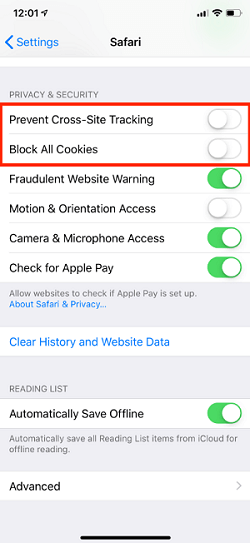
Privacy and Security Settings on iPhone
What Cookies Are and When To Use Them
Cookies are small pieces of website data that a browser stores for a site. They can remember sign-ins, language choices, carts, and other settings the next time you visit.
There are two main types of cookies with different jobs. First-party cookies usually help a site work normally, while third-party cookies are more often used for advertising or cross-site tracking.
That is why enabling cookies on your iPhone and Mac can save time on trusted sites, especially when you revisit them often.
Cookies can remember site preferences, keep you signed in, and save items left in a shopping cart. They can also store permission choices, which is why privacy settings still matter.
Enable Cookies in Safari
Safari is Apple's built-in browser. On current iPhone software, you usually enable cookies by turning off Block All Cookies, while Prevent Cross-Site Tracking can stay on to limit third-party tracking.
Steps in iOS 11 and later versions:
- Go to Settings, tap Apps, then tap Safari.
- Find Privacy & Security and turn Block All Cookies off so the switch is grey. No action is required if it's already off.
- Leave Prevent Cross-Site Tracking turned on if you want Safari to limit third-party cookies and cross-site tracking data.
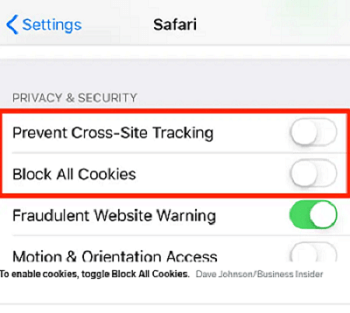
Tap Prevent Cross-Site Tracking to Allow First-Party Cookies
Steps on iPhone iOS 7 through 10:
- Go to Settings.
- Find and tap Safari.
- Scroll down and tap Block Cookies.
- Choose to allow cookies from the websites you visit, the current website, or always allow to enable cookies from websites you've never visited.
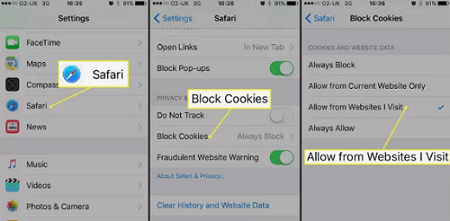
Steps to Enable Cookies on Ios 7 Through 10
Enable Cookies in the Chrome App
The Chrome app on iPhone usually accepts standard website cookies by default, so the setting most people change is cross-website tracking. You can browse in Incognito mode to avoid keeping a normal browsing session after you close it.
Steps
- Go to Settings and open the Chrome app on your iPhone.
- Disable third-party cookies by tapping Allow Cross-Website Tracking.
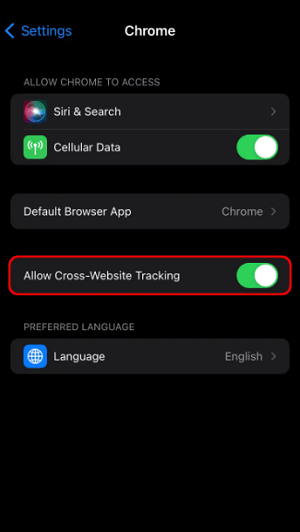
Allow Cross Website Tracking on Chrome
Enable Cookies in Firefox
Like Chrome, Firefox on iPhone usually keeps standard site cookies on, so you mainly manage cross-website tracking for extra privacy. You can also avoid keeping a normal browsing session by using Private mode.
- Open the Settingsapp on your iPhone and tap Firefox.
- Deactivate third-party cookies by tapping Allow Cross-Website Tracking.
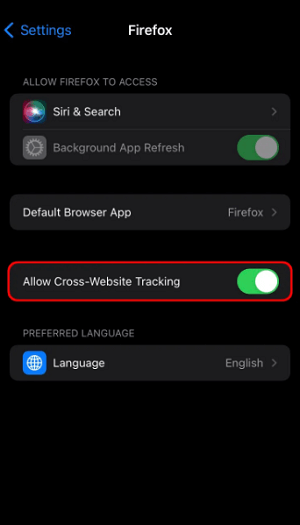
Allow or Deactive Cross Website Tracking in the Firefox Web Browser
Enable Cookies in Yahoo Mail
Some Yahoo pages offer limited sign-in or account features until cookies are allowed in a supported browser. On iPhone, that usually means checking Safari's cookie setting first.
- Open the Settings app on your iPhone.
- Go to Safari, then tap Block All Cookies to switch it off.
- Tap the arrow at the top-left corner to save changes.
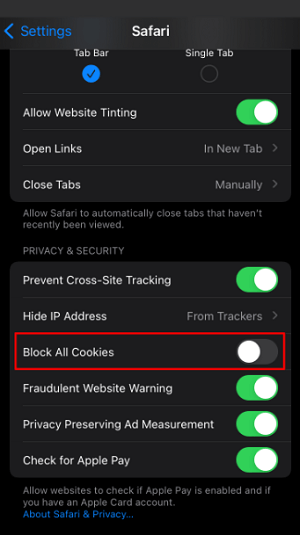
Enable Cookies for Yahoo Mail on the Safari Browser
How to Delete and Block Cookies on iPhone
Steps to delete cookies on your iPhone:
- Go to Settings, tap Apps, then tap Safari.
- Tap Advanced, then Website Data.
- You can slide specific website cookies to the left and Delete or tap Remove all Website Data to remove all cookies.
- Confirm the action by tapping Remove Now. This clears stored website data and cookies for Safari.
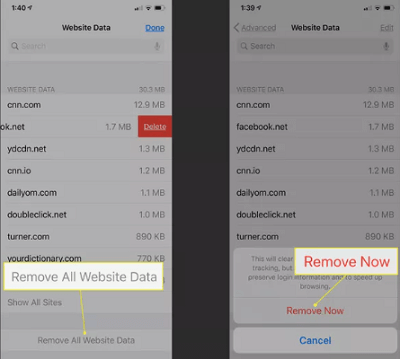
Steps to Delete Some or All Cookies From Your iPhone
Steps to delete search history on an iPhone:
The most practical way to delete cookies on an iPhone is by deleting the search history in terms of the websites that you visited. As far as iPhones are concerned, these two are the same.
Here is how to delete history on your iPhone:
- Go to Settings, then tap Safari.
- Scroll down to find and tap Clear History and Website Data.
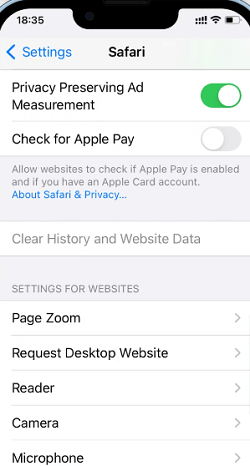
Delete by Tapping Clear History and Website Data
If you only want to remove data from one website, use the per-site list instead:
- Go to Settings and then proceed to tap Safari.
- Open Advanced Website Data, swipe left on individual websites, and tap delete.
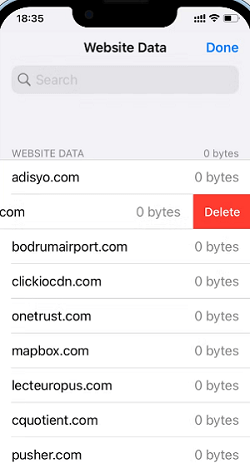
Steps to Delete Cookies From Specific Websites
How to Block Cookies on an iPhone
After deleting your website history and cookies, you can block all new cookies completely if you want maximum privacy, but some sites may stop working properly:
- Go to Settings and open Safari.
- Toggle on Block All Cookies and confirm by tapping Block All on the dialogue box.
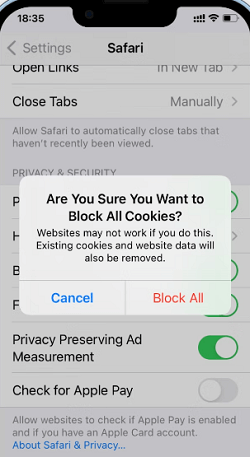
Block All Cookies on Ios 11 and Later Software
For those with iPhones using iOS 7 to 10, this is the process:
- Go to Settings, then find Safari.
- Tap Block Cookies and select Always Block.
About Deleting and Blocking Cookies on iPhone
There is a lot of confusion regarding cookies because, on the one hand, they can smoothen your online experience and, on the other hand, be used to infringe on your online privacy by collecting information on your location, job finances, shopping habits, and more.
Deleting cookies can prove helpful if you use a shared computer to protect your privacy from other users and website hosts who use persistent cookies. You will witness fewer targeted ads as websites won't be able to create a digital persona based on your browsing data.
However, when you delete cookies, you also remove saved logins, website preferences, and parts of your browsing session. That means you may need to sign in again, reset site settings, and rebuild shopping carts.
As we have seen, though, cookies are divided into two types. When people talk of them infringing privacy, it's the third-party cookies they are usually worried about.
Remember that deleting cookies doesn't stop all data tracking, because some websites can still use other signals unless you also clear the cache and browsing history. Your internet service provider may also infer details from your connection and browser setup.
How to Use Content Blockers
You can also use third-party apps and extensions known as content blockers to block pop-ups, resources, images, and other content in the Safari browser.
The following is how to get a content blocker:
- Visit the App Store to download your preferred content-blocking app.
- Go to Settings > Safari > Extensions.
- Turn on your preferred content blocker.
What is Apple's Policy on the Use of Cookies
Apple uses cookies categorized based on the guidelines found in the ICC UK cookie guide, especially the following categories on their website and other online services.
Category One - Strictly Necessary Cookies
These cookies enable users to browse their websites and use their features to access services like shopping baskets and e-billing.
Category Two - Performance Cookies
These cookies collect aggregated and anonymous information about how you use their websites. This data is then used to optimize the website experience and inform affiliate marketers whether customers originated from their sites.
Category Three - Functionality Cookies
These cookies record your browsing choices, including location, to ensure they only show you content optimized for your geographic location. They keep preferences like text size and fonts, among other customizable elements, and keep track of actions to avoid repetition. However, this information will not personally identify you nor track your browsing history on non-Apple websites.
FAQs About Cookies on iPhone
Q1: What are first-party cookies?
These are cookies generated by the websites you visit to improve your online experience by storing your preferences and behavior. For example, eCommerce sites keep your credentials and products in the cart for a smoother return visit.
Q2: What are third-party cookies?
These are cookies created by websites you visit on suggestions from the website you are browsing. They are transferred onto your device when you click on the Share and Like buttons to view content on third-party websites, which then can monitor the sites you are browsing to send you targeted ads.
Q3: Why does Yahoo Mail say my cookies are off?
Yahoo Mail says that when your browser settings are such that cookies are currently disabled or blocked. That may prevent you from staying signed in to a Yahoo website, in which case you only need to follow the above steps to ensure your browser is set to accept cookies.
You are set to enjoy a streamlined and secure online experience on your Apple devices, no matter your default browser. While the fear instilled by online privacy experts regarding privacy is well-founded, not all cookies are to blame.
Take advantage of the above information on enabling and disabling cookies to balance first-party and third-party for a smooth experience and to save time online.
